How to Invest in Property for Rental Income?
Rental income has become an important part of residential property investment across many Indian cities. Apartments located near commercial districts, transport corridors, educational institutions and established social infrastructure often attract consistent tenant demand over longer periods.
For many investors, rental-focused property purchases involve balancing several factors such as location demand, tenant profile, maintenance costs, financing structure, and long-term appreciation potential. A structured approach during property selection and financial planning can support more stable rental returns over time.
Why Rental Income Matters in Residential Property Investment
Residential property investments are often associated with two financial components: rental earnings and long-term capital appreciation. While property values may change gradually across market cycles, rental income can provide regular cash flow during ownership.
Rental-focused investments are commonly considered for:
Supplementary monthly income
Long-term asset ownership
Retirement-oriented financial planning
Portfolio diversification
Future self-use flexibility
In premium residential markets, tenant demand is often influenced by connectivity, surrounding infrastructure, project amenities, and maintenance standards.
The table below showcases common factors linked to rental demand:
Choosing the Right Location for Rental Demand
Location selection remains one of the most important aspects of rental-focused property investment. Tenant demand patterns may vary significantly across cities and micro-markets.
Residential locations often attract stronger rental activity if they are connected to:
Business districts
IT corridors
Industrial zones
Educational institutions
Metro networks
Healthcare infrastructure
In developing residential corridors, rental demand may increase gradually as infrastructure projects become operational.
Before purchasing a rental property, investors commonly review:
Vacancy levels in the locality
Average rental rates for similar apartments
Upcoming infrastructure projects
Existing tenant profile in the area
Public transport accessibility
Social infrastructure availability
Projects located within integrated townships may also attract tenants looking for access to daily conveniences within a single residential environment.
Selecting the Right Property Type
Different property formats may generate different rental patterns depending on locality and tenant profile.
The table below outlines broad rental considerations across common residential formats:
In many cities, mid-sized apartments often attract broader tenant demand due to affordability and practical space utilisation.
Evaluate Rental Yield Before Investing
Rental yield refers to the annual rental income generated as a percentage of the property's purchase cost. Investors often use rental yield estimates during property comparison.
The basic calculation generally follows this structure:
Annual rental income ÷ Property cost × 100
For example:
Rental yield may vary depending on city, property type, furnishing level, and surrounding infrastructure.
Alongside rental yield, investors also review:
Maintenance charges
Property tax obligations
Vacancy periods
Brokerage expenses
Repair and furnishing costs
These expenses influence the net rental return generated during ownership. Rental income is generally taxed under the head “Income from House Property”, as outlined by the Income Tax Department.
Financing and Loan Planning for Rental Property
Many investors purchase rental properties through home loans. Loan structure and EMI planning can influence overall investment performance over time.
Before financing a rental property, buyers commonly assess:
Down payment requirements
Loan tenure
EMI obligations
Interest rate type
Expected rental income
Existing financial liabilities
Some investors prefer rental income that partially offsets monthly EMI payments. However, rental cash flow may not fully cover loan obligations during initial ownership years.
The table below shows common financial aspects linked to rental property purchases:
Financial planning becomes particularly important during periods of vacancy or market slowdown.
Legal and Documentation Checks
Legal verification remains an important part of rental property investment. Investors generally review both ownership records and project approvals before completing a purchase.
Documents commonly reviewed involve:
Title deed
Sale agreement
Encumbrance Certificate
Occupancy Certificate
RERA registration certificate
Approved project plans
RERA portals are also commonly used for reviewing project timelines, developer details, and regulatory disclosures during property evaluation.
Furnishing and Tenant Appeal
Tenant preferences may differ depending on city, rental segment, and target demographic. Professionals relocating for work may prefer partially furnished or fully furnished apartments with:
Modular kitchen fittings
Wardrobes
Air conditioning
Internet readiness
Appliance support
Family-oriented tenants may prioritise:
Storage space
School connectivity
Security systems
Open spaces
Community environment
Projects with organised maintenance systems and operational amenities often support stronger tenant retention across longer rental periods. Green residential certification systems such as IGBC Green Homes may also be reviewed in projects that place emphasis on sustainability features.
Managing Maintenance and Vacancy Risks
Rental income is influenced not only by tenant demand but also by maintenance standards and occupancy continuity.
Property owners commonly plan for:
Periodic repairs
Painting and refurbishment
Appliance replacement
Society maintenance charges
Vacancy-related income gaps
Vacancy periods may vary across localities and market cycles. Investors often maintain reserve funds for periods during which rental income may temporarily pause.
Completed residential communities with active occupancy and organised maintenance systems may support more stable tenant movement over time.
Taxation and Rental Income Considerations
Rental income from residential property is generally taxable under applicable income tax provisions in India. Investors often review taxation aspects before finalising a rental-focused purchase.
Common considerations may involve:
Municipal tax deductions
Standard deduction provisions
Home loan interest deductions under applicable rules
Joint ownership taxation structure
Capital gains implications during resale
Since taxation rules may change periodically, many investors consult tax professionals during financial planning for rental properties.
Long-Term Appreciation and Exit Planning
Rental income is only one part of residential investment performance. Long-term appreciation potential also influences property selection decisions.
Areas attracting infrastructure investment, metro connectivity, commercial expansion, and social infrastructure growth often witness stronger residential demand over time.
Investors commonly review:
Upcoming infrastructure projects
Commercial growth corridors
Residential supply pipeline
Occupancy trends
Future resale demand
Some industry bodies also publish broader real estate sector information that may provide context on residential market activity and development trends.
Final Thoughts on Property Investment for Rental Income
Rental-focused property investment involves several interconnected factors such as location demand, tenant profile, financing structure, legal verification, maintenance planning, and long-term appreciation potential. Residential projects with organised infrastructure, operational amenities, and stable occupancy patterns often attract stronger rental activity across different market conditions.
Since rental trends vary across cities and micro-markets, investors generally combine financial planning with on-ground property assessment before proceeding with a residential investment purchase.
Frequently Asked Questions (FAQs)
1. Can rental income vary between furnished and unfurnished apartments?
Rental pricing may differ depending on furnishing level, appliance availability, interior condition, and tenant expectations within the specific residential locality and market segment.
2. Why do investors review nearby commercial activity before purchasing rental property?
Commercial districts often influence tenant demand by attracting working professionals seeking residential accommodation closer to offices, transport corridors, and daily conveniences.
3. Do maintenance charges affect rental profitability over time?
Higher maintenance expenses may influence overall rental returns, particularly in projects with extensive amenities, larger common areas, or premium facility management services.
4. Can rental demand change after new infrastructure projects become operational?
Infrastructure additions such as metro corridors, flyovers, and business districts may gradually influence tenant movement, occupancy levels, and rental demand across surrounding residential areas.
5. Why do some investors prefer ready-to-move rental properties?
Ready-to-move properties may support earlier rental occupancy since possession, approvals, and operational residential infrastructure are already available at the time of purchase.
Recommended
 7 MIN READ
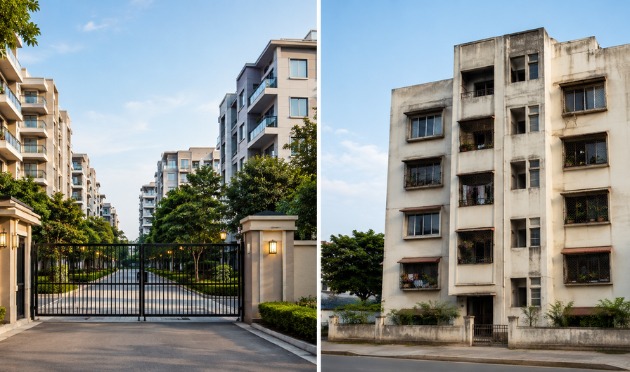
Gated Community vs Standalone Building
Gated communities offer integrated amenities and structured management, while standalone buildings provide a more compact, independent living experience. Here is how the two formats differ in maintenance, design and lifestyle fit.
 7 MIN READ
How to Check Legal Status of Property?
A guide to property verification in India, covering ownership checks, encumbrance certificates, RERA disclosures, and how to verify legal status of a property online.
 6 MIN READ
How to Check Builder Reputation?
A builder's delivery history matters as much as the flat itself. Here's how to check RERA disclosures, complaint records, past project timelines, and resident feedback before you buy.